A microscope, in Baltimore.
Step past the edge of the ordinary and peer into the unseen architecture of everyday life. Through the lens of a retired research microscope, we capture the hidden geometry of the microscopic world.

Who we are
Bmoremicro is a microscope art studio run by Martín Yepes Trujillo and Edgar Manriquez-Sandoval in Baltimore, Maryland.
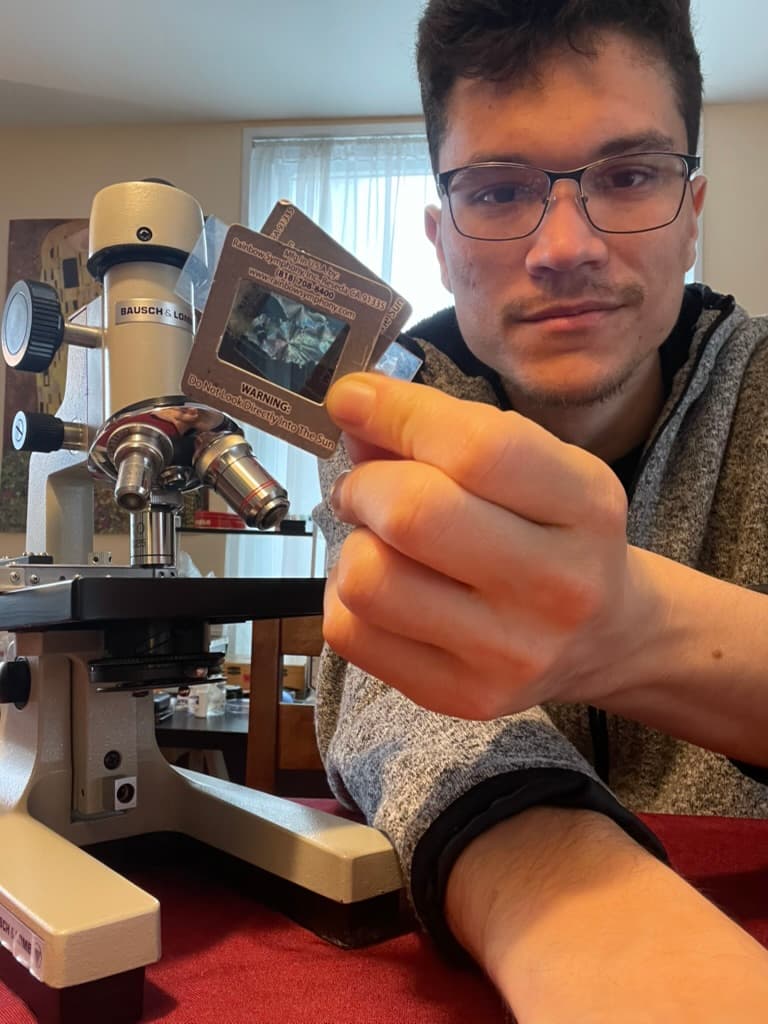
Martín learned microscopy as a biophysicist at Johns Hopkins, using lasers and high-powered optics to study single molecules inside living cells. At home, he started pointing microscopes at less practical things: crystals, insects, flowers, food and anything else that could fit between a slide and coverslip.
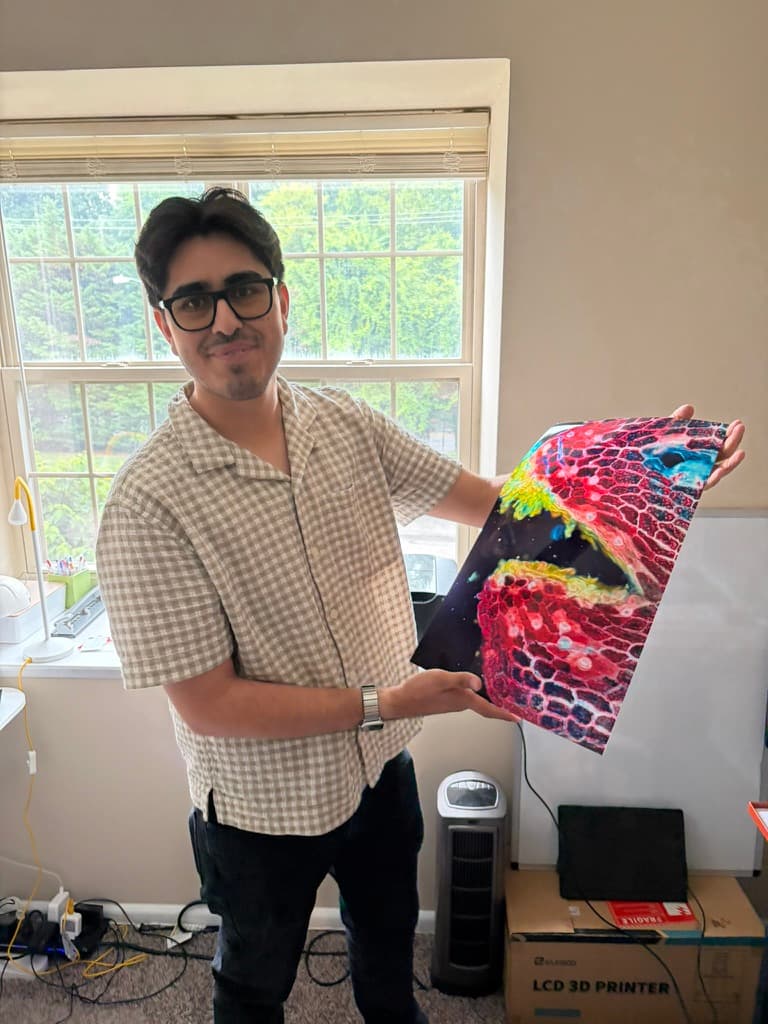
What began as Martín’s art project eventually became ours. Martín makes the images; Edgar prints them; together we’ve created a unique studio built around finding strange beauty in familiar things.

How it's made
Every image begins with a real specimen seen through glass and metal.
Most are photographed on a retired Zeiss Axioskop rescued from a Johns Hopkins lab cleanout. The microscope came from Nobel laureate Carol Greider’s former lab, arrived with missing optics and a broken camera, and was rebuilt at home piece by piece.
Today its light path can switch between polarization, darkfield, differential interference contrast, fluorescence and other microscopy techniques. Scientific tools let us step past the edge of the ordinary, and an iPhone at the eyepiece records the unseen architecture of everyday life. We don’t chemically stain our samples or add false color in post-production; the color is created during capture by the sample, the light and the optics.
Then we make it physical. Each image is printed at a scale hundreds of times larger than the original specimen and prepared as a signed and framed piece of custom work. A picture that began on a 25 mm glass slide can end up filling a wall.

Out of the lab
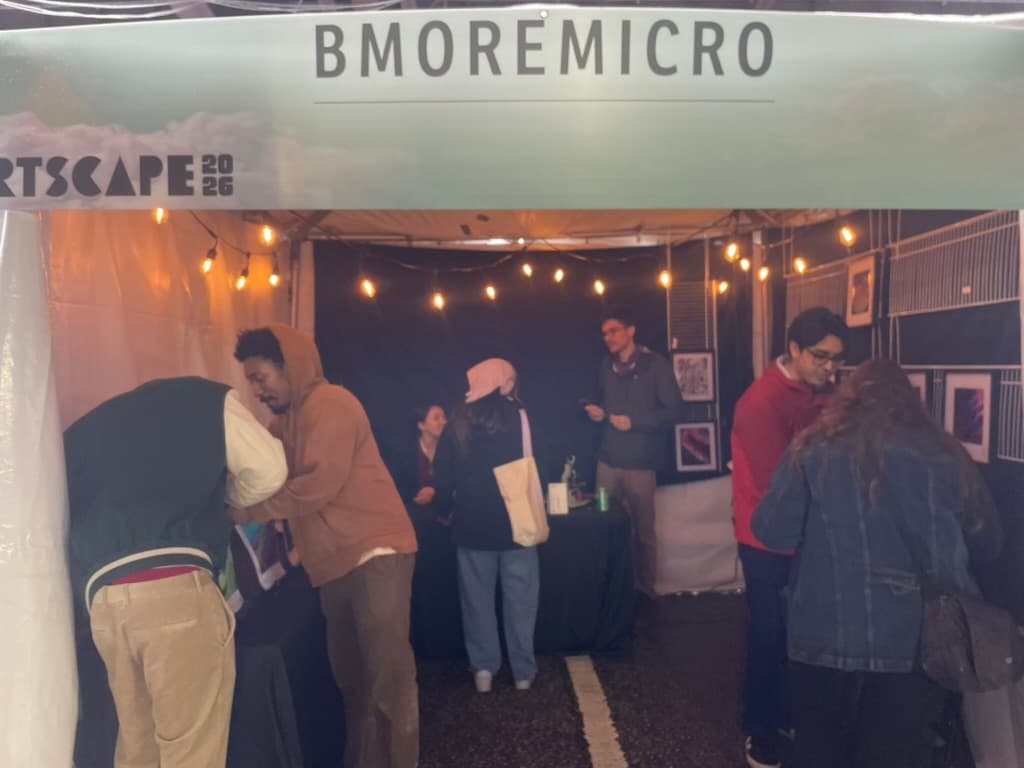
We love microscopes, but we don’t like keeping the work in the lab.
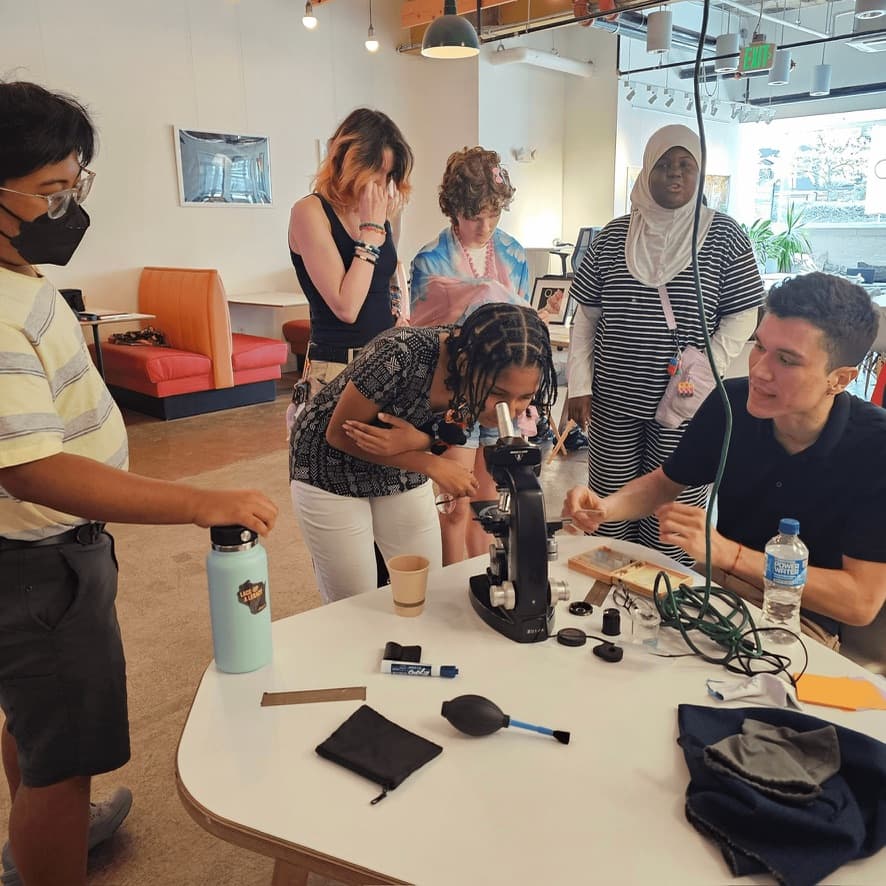
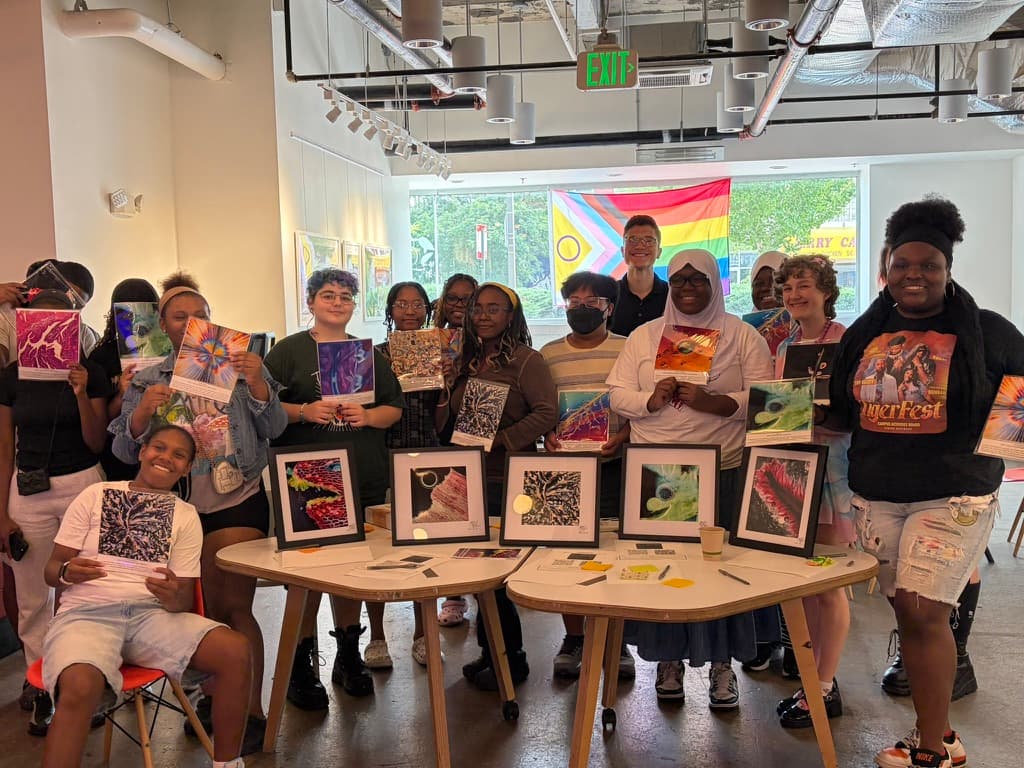
Bmoremicro was featured as an Emerging Artist at Artscape 2026, and brought science into the street where people can look through the eyepiece themselves. Our work has also appeared on the cover of Charm City Science and was selected as a finalist in the Biophysical Society’s Art in Science competition.
Outdoor markets, science workshops in Baltimore schools and in-person conversations have shaped the project as much as anything we do behind the microscope. Check the Journal for where we’ve been lately, and where to find us next.
The work
View all — The work
Umami Nova8 × 8 · 8 × 10 in · from $30 Out of stock


“Some profound and inspiring quote by Martin.”
— Martín Yepes Trujillo, Bmore Micro